
Key facts
Planning ranges, not a personal prediction. Your operation and recovery may differ.
- Procedure time
- Often around 2–5 hours; combined or more extensive plans may take longer.
- Anaesthesia
- General anaesthesia or local anaesthesia with sedation, according to the operation and assessment.
- Hospital stay
- Same-day discharge or an overnight stay; additional observation may be needed.
- Return to work
- Often 2–4 weeks; visible bruising and public-facing work may affect timing.
- Settled result
- Progressive improvement over several months; review the settled result around 6–12 months.
- How long results last
- Often many years; around 10 years is a general guide, not a guarantee. Ageing continues.
What a facelift changes—and what it does not
A facelift addresses tissue descent, especially around the cheeks, jowls and lower face; it does not treat every sign of ageing. The operation works with your existing anatomy. It cannot give you someone else's facial structure or promise that you will look a particular number of years younger.
Skin texture, pigmentation and fine surface lines are different concerns from sagging. Eyelid skin and brow position may also require separate assessment. Tell the surgeon what you notice in ordinary light and daily life, rather than relying only on a magnified photograph or a filtered image.
A helpful goal might be improved jawline definition while preserving familiar expression. Another person may mainly want to discuss a neck fold. The consultation should distinguish what surgery could change from features best left alone. Choosing no treatment remains reasonable, and an operation should not be a response to pressure from others.
Who may be suitable, and when should surgery wait?
Suitability depends on the pattern of laxity, skin quality, general health and realistic expectations, rather than age alone. People of different ages may have similar concerns but need different treatments. Examination considers facial proportions, existing asymmetry, tissue thickness and the changes that matter to you.
Smoking and other nicotine exposure can impair healing and threaten skin survival. Be open about cigarettes, vaping and nicotine products, and follow an agreed cessation plan before and after surgery. Uncontrolled blood pressure, bleeding problems or illness that makes anaesthesia unsafe may require treatment or postponement.
Tell the surgeon about previous facial surgery, threads, fillers, energy treatments and any facial weakness or numbness. These details can affect planning. Also explain if the hoped-for change is tied to a major life event or if appearance concerns are taking over daily life. A careful consultation may recommend more time, another assessment or no surgery, rather than an operation that cannot meet your needs.
SMAS and deep plane: a patient-friendly explanation
Both approaches address deeper support rather than simply stretching the skin. SMAS is the superficial musculoaponeurotic system: a layer of fibrous tissue linked with facial muscles underneath the skin and fat. Think of it as part of the face's supporting framework, not as a separate muscle that everyone needs tightened in the same way.
In SMAS-based surgery, the surgeon may fold, tighten, trim or reposition this layer using an approach suited to the anatomy. In a deep-plane facelift, selected dissection occurs beneath the SMAS, with release of supporting attachments so connected tissues can be repositioned. Terminology overlaps: deep-plane surgery also involves the SMAS system. These are families of techniques, not two completely unrelated operations.
The useful question is not “Which name is best?” but “Which tissues are causing my concern, and how does this approach address them?” Ask about the proposed extent, nerve protection, scar placement and limitations. No technique name establishes the surgeon's experience or predicts an individual outcome.
A more extensive dissection is not automatically the right choice for mild laxity, and a smaller operation may not address substantial neck or cheek descent. This article explains options; it does not confirm that a particular named technique is offered or appropriate for you. Confirm the proposed method directly during consultation.
Mini facelift, fuller treatment and the neck
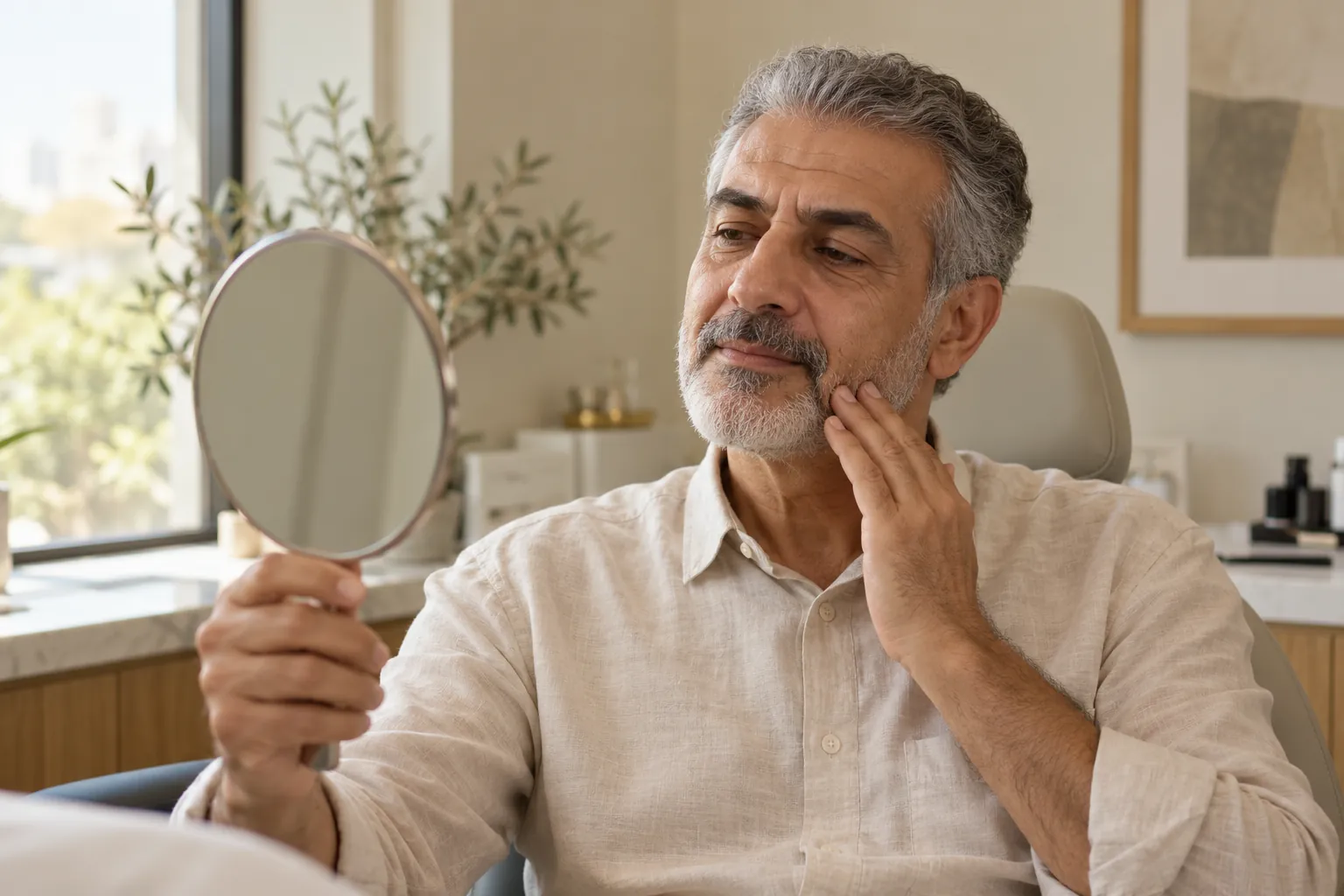
A limited or “mini” facelift targets selected mild lower-face laxity; a more extensive plan can address a wider pattern of descent. The term mini is not standardised. Ask what the operation actually includes rather than assuming it always means a particular scar, anaesthetic or recovery time.
Neck assessment considers loose skin, fat distribution and the platysma, a thin sheet of muscle that can form visible bands. A neck lift may involve skin redraping, selected fat treatment and platysma repair. Depending on the plan, incisions may extend around the ears and include a small opening under the chin.
Chin projection, jaw shape, salivary glands and deeper neck anatomy also influence appearance. Not every source of fullness should be removed or can be corrected safely through the proposed procedure. Ask what is likely to remain. A facelift without sufficient neck treatment may not meet a neck-focused goal; conversely, an isolated neck procedure may be enough for a selected concern.
| Option | Possible focus | What to clarify |
|---|---|---|
| Limited / mini lift | Selected mild lower-face laxity | Meaning varies; confirm the actual extent |
| More extensive facelift | Broader facial tissue descent | Technique, neck plan and scar placement |
| Neck lift | Selected neck skin, fat or muscle bands | Whether separate or combined |
Eyelid surgery, fat grafting and other options
Additional procedures should address a separate, clearly identified concern—not simply complete a package. Eyelid surgery may be discussed for excess eyelid skin or selected fat prominence. It has its own assessment, risks and recovery, particularly when dry eyes or previous eye problems are present.
Fat grafting can be considered for selected areas of volume loss. Fat is taken from another body area and transferred in small amounts; some is reabsorbed, so the retained volume is variable. Irregularity, asymmetry and uncommon serious vascular complications belong in the consent discussion. Adding volume does not replace correction of substantial sagging.
Skin care, resurfacing or injectables may address different problems, but are not equivalents to a surgical lift. Ask whether doing less, doing nothing or separating treatments would better serve your priorities. This is especially relevant if you are already considering body surgery or a mommy makeover: combining unrelated operations requires an individual safety assessment.
Your journey with Dr. Anas: assessment to follow-up
The first step is a consultation that translates your concerns into a specific, understandable plan. With Dr. Anas Abdullah in Amman, discuss your medical history, previous treatments and the changes you would welcome or want to avoid. Bring questions about expression, scars and recovery rather than choosing a technique before examination.
The plan should distinguish face, neck, eyelids and skin-surface concerns. Ask to review incision locations and alternatives, and clarify consent for medical photographs and their use. An explanation of privacy should be practical, including how requested images and records are shared.
Before hospital-based surgery, confirm the surgical setting, anaesthetic assessment, medication instructions and arrangements for the first night. On the day, the team confirms the operation and safety checks. After surgery, monitoring and written instructions cover dressings, any drains, comfort and safe movement.
Follow-up assesses swelling, wounds, facial movement and the developing result. Agree when Dr. Anas will review you personally, how questions between appointments are managed and who provides urgent cover. A worthwhile plan includes care after the operation, not only the operation itself. You should have time to think before making a commitment.
Remote assessment and travelling to Jordan
A remote consultation can start the discussion, but an in-person examination is needed before the final surgical plan. Ask the clinic about secure sharing of photographs and medical history. Images alone cannot establish skin quality, tissue mobility or anaesthetic suitability.
International patients should coordinate consultation, hospital arrangements and follow-up dates before booking travel. Confirm what assistance the clinic actually provides, and whether accommodation or transfers are separate. Arrange an adult companion and leave room for extra reviews; a flight booking must not determine whether you are ready to travel.
Before returning home, ask for a summary of treatment, wound-care instructions and a clear contact route. Discuss the timing of flying or a long car journey with the surgical team. If an urgent problem develops after you leave, seek local medical care rather than waiting for a remote assessment.
Sources: [8]
Recovery from week one to months six–twelve
Recovery includes both physical healing and feeling comfortable being seen socially. In week one, swelling, bruising, tightness and altered sensation are expected. Follow instructions about head support, dressings, hair washing and medication. Arrange help and gentle activity as advised, avoiding straining or movements that place pressure on the operated area.
During weeks two to four, many people gradually resume desk work or social activity, but visible bruising and swelling vary. A return to work does not mean all tissues have healed. Ask when driving is safe, taking account of pain medication and comfortable head movement. Do not schedule an important public event around the earliest possible recovery estimate.
During months one to three, swelling usually becomes less obvious, although numbness, firmness or mild unevenness may continue. Resume exercise only as cleared. If something worsens rather than gradually improves, contact the team instead of attributing it automatically to normal healing.
During months six to twelve, the result can be assessed more fairly and scar maturation reviewed. Photographs at agreed intervals are more useful than daily comparisons under changing light. Some scars and sensory changes take longer to settle; persistent concerns deserve a discussion, including whether observation or another treatment is appropriate.

Risks and how they are reduced
Facelift and neck-lift risks include bleeding, wound problems, nerve injury, infection, scarring and anaesthetic complications. Their likelihood depends on health, anatomy, the procedure and healing. Ask for an individual explanation rather than a claim that a named technique is risk-free.
A haematoma is a collection of blood under the skin. It can cause rapidly increasing swelling and pressure and may require urgent surgery. Blood-pressure control, careful medication planning and postoperative monitoring help reduce risk. Do not independently stop prescribed blood thinners; the surgeon and prescribing clinician must agree the plan.
Facial nerve injury can cause weakness or asymmetry of movement, sometimes temporary and occasionally lasting. Sensory nerve changes can cause numbness or unusual sensations. Knowledge of anatomy, careful technique and appropriate selection reduce risk without eliminating it. Report new weakness or unexpected changes promptly.
Poor skin blood supply can cause delayed healing or skin loss, particularly with smoking. Infection, fluid collections, hair loss near incisions, visible or thickened scars and dissatisfaction are also possible. Nicotine cessation, wound instructions and planned reviews are practical safeguards.
Sudden neck swelling, breathing or swallowing difficulty, chest pain or severe breathlessness needs emergency assessment. Increasing pain, fever, spreading redness, drainage or a concerning change in facial movement requires prompt contact and examination. Rare clot-related complications are addressed through individual assessment and prevention. Never wait for a routine appointment when symptoms are urgent.
Natural-looking goals, lasting change and scars
A realistic result improves selected contours while remaining recognisably your face. Natural appearance is a goal, not a promise. Existing asymmetry, bone structure, skin quality and how tissues heal all influence what is achievable.
Scars are permanent, although usually planned around the hairline and ear contours, with an additional chin incision when needed. Ask about your usual hairstyle, beard line and preference for covering the ears. Scar visibility, hairline changes or altered earlobe contours are worth discussing before surgery, not discovering afterwards.
Results can last for years, but the face continues ageing. A general estimate such as ten years is not an expiry date or an individual guarantee. Weight changes, sun exposure and tissue characteristics influence how appearance evolves. Skin care and sun protection support skin health but do not freeze the surgical result. Compare progress over time with the surgeon and discuss any revision only after appropriate assessment of healing and goals.
Sources: [2]

Why begin with a personal consultation?
Dr. Anas Abdullah's website describes an approach based on individual assessment, international surgical training and plastic and reconstructive practice in Amman. The existing biography sets out his professional background; an article should not add unverified credentials or suggest that photographs demonstrate his results.
A consultation is the place to discuss personal follow-up, privacy and hospital-based care, and to confirm the exact technique being proposed. Ask what Dr. Anas would recommend leaving unchanged and why. You can book an in-person appointment or ask about an initial remote discussion, then decide in your own time whether surgery fits your priorities and practical circumstances.
Common questions
What is the best age for a facelift?
There is no single best age. The pattern of sagging, health, skin quality and goals matter more than a birthday. An assessment may suggest surgery, another option or no treatment.
Is deep plane better than a SMAS facelift?
Not for everyone. Deep-plane surgery also involves the SMAS system, and both terms cover variations. Compare the plan for your anatomy, the surgeon’s explanation and the risks rather than selecting by a label alone.
Do I need a neck lift with my facelift?
Only if the assessment supports it. Neck skin, fat and muscle bands need separate consideration. Ask whether the proposed operation includes the neck and what changes it is expected to make.
Will I look pulled or lose my expression?
Preserving familiar expression is an important goal, but no appearance can be guaranteed. Discuss tension, tissue repositioning and your preferences, as well as the possibility of asymmetry, nerve injury or dissatisfaction.
How much does a facelift cost in Jordan?
Cost depends on the extent, neck treatment, any additional procedure, anaesthesia, hospital stay and follow-up. Request an itemised estimate including possible extra care or revision arrangements; a technique name alone cannot define the price.
When can I go back to work or attend an event?
Many people plan around two to four weeks, but visible bruising and swelling may persist. Public-facing work and important events need extra flexibility. Ask for a personalised estimate rather than the shortest possible recovery time.
Can fillers replace a facelift?
Fillers treat selected volume concerns and do not remove substantial loose skin. They have their own risks. An examination helps distinguish volume loss, sagging and skin-surface changes before considering alternatives.
How long does a facelift last?
Often many years, with roughly ten years used as a general reference. Ageing continues and individual durability varies. Further treatment is a future choice, not an automatic requirement at a fixed date.
Can men have a facelift and neck lift?
Yes, selected men may be suitable. Planning should consider beard-bearing skin, hairline, scar visibility and individual goals. The same need for health assessment, realistic expectations and recovery support applies.
Why consider facelift surgery in Jordan?
Care in Amman may suit residents and people travelling from nearby countries who can arrange appropriate follow-up. Judge the clinician, hospital, communication and recovery arrangements individually. Geography alone does not establish safety, value or suitability.
Continue reading
Body contouring after weight lossMommy makeover and individual planningRhinoplasty and facial proportionsArrange a consultationDr. Anas Abdullah: professional biographyA conversation is a useful first step
Arrange an in-person or initial remote consultation to discuss your priorities and suitability.
References & further reading
[1]NHS — Facelift[2]Mayo Clinic — Face-lift[3]Cleveland Clinic — Facelift approaches[4]ASPS — Facelift procedure steps[5]ASPS — Facelift risks and safety[6]ASPS — Neck lift[7]ASPS — Facelift recovery[8]Royal College of Surgeons — Surgery abroadGeneral educational content based on the references above. It does not replace examination or the treating surgeon’s instructions. Individual benefits, risks and recovery vary.